JEE Physics Crash Course in 60 Days vs Year-Long Revision: Which Chapters Survive?
Discover which JEE Physics topics survive a 60-day crash course and which ones decay rapidly without continuous, long-term review.
JEE Physics Crash Course in 60 Days vs Year-Long Revision: Which Chapters Survive?
Preparing for JEE Physics in the last 60 days can feel overwhelming. With limited time, it is tempting to treat every chapter the same and hope a crash course covers everything. In reality, that approach rarely works. Some chapters can be revised and mastered quickly, while others need repeated practice over several weeks to build confidence. A JEE Physics crash course works best for formula-based chapters like Modern Physics, Semiconductor Devices, and Units and Measurements, where revision and question practice are usually enough.
But topics such as Electrostatics, Rotational Mechanics, and Electromagnetic Induction require stronger conceptual understanding and regular problem-solving, making them harder to prepare in a short window.
This guide helps you decide which chapters are ideal for crash-course revision and which need a longer preparation strategy. You'll also find a practical revision plan that combines focused revision with continuous practice, so you can make the most of the final weeks before JEE.
What a JEE Physics Crash Course in 60 Days Can Actually Fix
Most crash-course marketing treats every chapter the same way: attend the classes, take the mocks, cover the syllabus, done. That works fine for topics built on discrete formulas and short recall chains. However, it quietly fails on chapters requiring multi-step derivations that students practice over months. Here is the distinction that has the biggest impact on your JEE mock test scores:
-
Formula-driven chapters, such as Modern Physics, Semiconductor Devices, Units and Measurements, and much of Current Electricity, are well suited for crash-course revision. Once you understand the basics, repeated practice and formula recall are usually enough to improve your performance.
-
Concept-intensive chapters like Electrostatics, Rotational Mechanics, Electromagnetic Induction, and Magnetism require a different approach. These topics involve multi-step reasoning and derivations, so simply memorising formulas is rarely enough. Without regular revision and problem-solving practice, accuracy tends to drop over time.
-
Modern Physics contributes around 15.9% of the JEE Main Physics paper, while Current Electricity, Electrostatics, Heat and Thermodynamics, and Optics each contribute roughly 9.9%. If you spend your final 60 days revising only the easier chapters, your JEE mock test scores may stop improving because many of the exam's high-weight, concept-heavy topics remain weak. A balanced revision plan should include both quick-win chapters and continuous practice for the tougher ones.
The Retention Risk Score: How to Tell Which Physics Chapters Decay Fast
Before you decide what goes into a crash course and what needs continuous review, score each chapter instead of guessing by feel.
The score below is a simple heuristic, not a lab measurement. However, it mirrors the same logic behind the forgetting curve hypothesis. The more reconstruction a topic demands, the faster you forget unreviewed knowledge of it.
Rate each chapter on three factors, 1 (low) to 5 (high), and add them up.
-
Derivation Complexity (D): how many logical steps separate the first principle from the final formula.
-
Multi-Step Problem Frequency (M): how often JEE questions on this chapter combine two or more concepts in one problem.
-
Low Formula Density (F): how few standalone, plug-in formulas exist relative to first-principles reasoning needed.
Add D + M + F to get a score between 3 and 15. A score of 3 to 6 indicates Low retention risk, 7 to 10 is Medium, and 11 to 15 is High. Modern Physics typically scores around 4 because it relies more on recall and direct application. Electrostatics and Rotational Mechanics usually score 12 or higher due to their heavy derivations, multi-step problem solving, and limited formula shortcuts.
If you're unsure how to rate a chapter, reviewing solved examples or structured explanations through reliable online coaching can help you assess its actual difficulty before planning your revision. This makes it easier to prioritise your preparation instead of building the retention score entirely from scratch.
Chapter-by-Chapter Retention Comparison Table
The table below applies the risk score to the ten highest-weightage JEE Physics chapters. It then translates that score into a practical call: crash-course friendly, or continuous-review territory. Use it to decide where your remaining study hours go in the next two months versus the next six.
| Chapter | Retention Risk (after 60-day gap) | Crash-Course Suitability | Year-Long Review Advantage | Hybrid Strategy |
|---|---|---|---|---|
| Modern Physics | Low | High | Minimal, mostly recall | Refresh formulas and PYQs in the final 30 days |
| Semiconductor Devices | Low | High | Minimal | Review in the final 20 days |
| Units, Dimensions & Errors | Low | High | Minimal | Quick refresher in the final 10 to 15 days |
| Current Electricity | Low to Medium | High | Moderate on Kirchhoff's law circuits | Crash course is fine, add 5 mixed problems monthly from 3 months out |
| Heat & Thermodynamics | Medium | Medium | Strong on calorimetry and P-V-T problems | Start dedicated revision 2 months before exam |
| Optics (Ray + Wave) | Medium to High | Medium | Strong on interference and diffraction sets | Begin combined revision 3 months before exam |
| Electrostatics | High | Low | Strong, Gauss's law derivations need rebuilding | Start continuous review 5 to 6 months before exam |
| Magnetism & Magnetic Effects | High | Low | Strong on Biot-Savart and torque derivations | Start continuous review 5 months before exam |
| Electromagnetic Induction & AC | High | Low | Strong on Lenz's law and phasor problems | Start continuous review 5 to 6 months before exam |
| Rotational Mechanics | High | Low | Strong, torque and angular momentum decay fastest | Start continuous review 6 months before exam |
The Hybrid Revision Calendar: Crash Course for Low Risk, Continuous Review for High Risk
Picking one revision style for the entire syllabus ignores how differently each chapter decays. This calendar assumes an exam roughly six months out. It layers continuous review for high-risk chapters on top of a final 60-day crash window for low-risk ones.
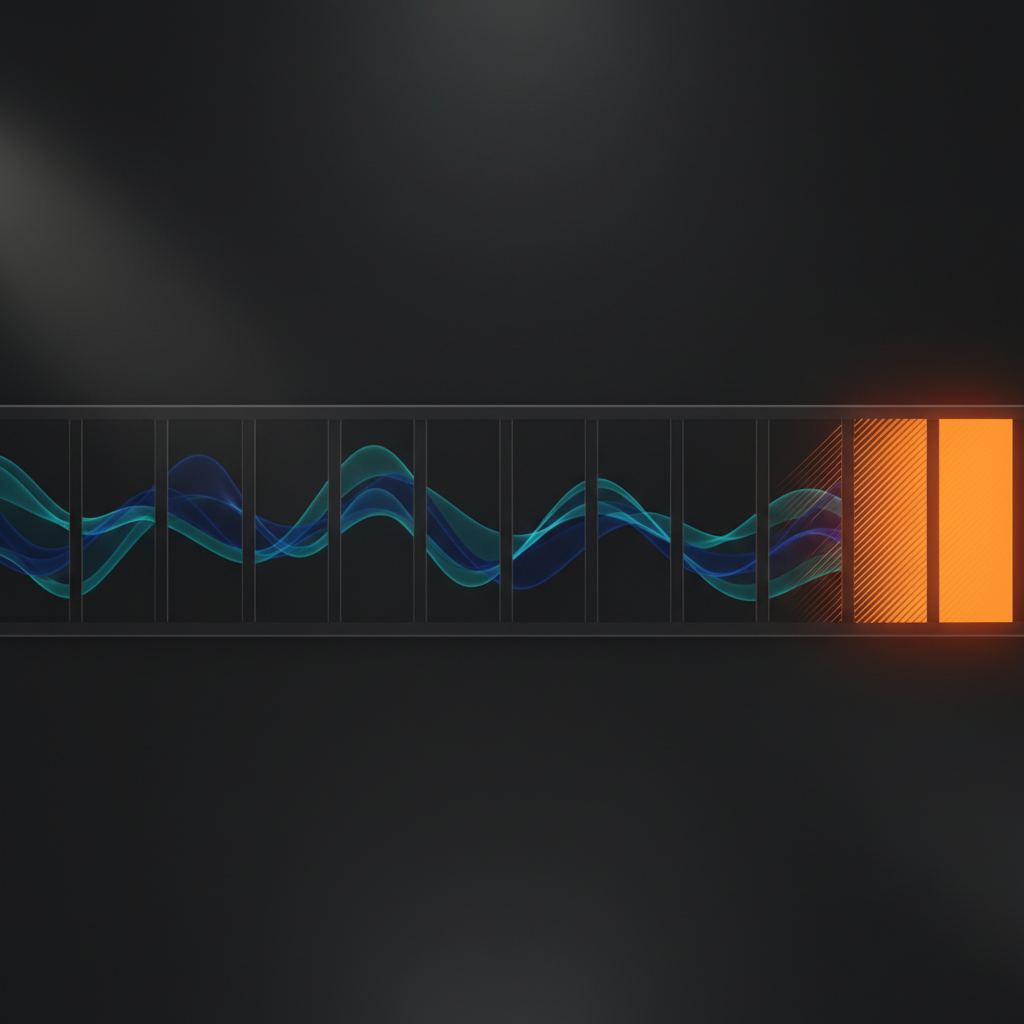 Follow the sequence in order rather than jumping straight to the crash phase.
-
6 months before exam: Begin continuous review of Rotational Mechanics, Electromagnetic Induction and AC circuits, and Magnetism. These decay fastest without repeated exposure.
-
5 months before the exam: Add Electrostatics into the weekly rotation with at least one multi-step problem set per week.
-
3 months before exam: Start combined revision of Optics and Heat and Thermodynamics. Alternate problem types to keep both active in memory.
-
60 days before exam (crash window): Cram Modern Physics, Semiconductor Devices, Units and Measurements, and Current Electricity fundamentals. These hold up fine on short notice.
-
Final 20 to 30 days: Run full-length mocks covering everything. Weight one extra review pass toward the high-risk chapters from steps 1 and 2. These chapters remain the most fragile, even after continuous review.
This approach follows the same principle as spaced repetition: revisiting difficult topics at regular intervals leads to better long-term retention than trying to learn everything in one intensive session just before the exam.
That is why many structured online courses combine concept revision, practice sessions, and periodic mock tests instead of relying only on a short burst of study. This is especially important for chapters that require multi-step reasoning rather than simple formula recall.
When Paying for Structured Crash-Course Support Is Actually Worth It
Before enrolling in a crash course, take a step back and assess where you stand. Many students who wonder how MHTCET students qualify JEE Mains assume the answer is simply studying harder, but in reality, choosing the right preparation strategy matters just as much. Check yourself against these points before spending on a crash course:
-
You have already covered 70% or more of the year-long syllabus and need consolidation, not fresh teaching. A crash course accelerates review here; it cannot substitute for foundational learning you skipped.
-
You still have three or more high-risk chapters untouched. A generic 60-day program that treats every chapter equally will not fix a foundation gap in Electrostatics or Rotational Mechanics; you need targeted, derivation-focused mentorship instead, ideally starting months, not weeks, before the exam.
-
Your mock scores are inconsistent and you cannot explain why. Structured doubt-solving and performance analytics become genuinely useful once self-diagnosis stops working.
-
You are self-studying and cannot tell which of your chapters are Low, Medium, or High risk on your own. That is exactly the gap a retention-aware program should close, rather than just repeating the syllabus faster.
Students preparing for JEE while also tracking a state-level entrance timetable often ask a related question: does a parallel program stretch focus too thin. For Maharashtra students balancing both tracks, a structured MHT CET 2027 batch can run alongside JEE prep without duplicating effort, since much of the Physics foundation overlaps.
Strengthen Your JEE Physics Preparation with RG Lectures
The final two months before JEE are all about using your time wisely. Instead of treating every chapter the same, focus on identifying which topics need quick revision and which require deeper conceptual practice. This approach helps you improve your preparation without wasting valuable study time.
At RG Lectures, JEE Physics preparation is designed to balance both. Students receive structured revision for formula-based chapters while also spending dedicated time on concept-heavy topics that need repeated practice and problem-solving. The goal is to build confidence where it matters most before the exam.
Explore our courses to match your current preparation level and help you make the most of your final weeks.
FAQs on jee physics crash course 60 days
Is a 60-day crash course enough to clear JEE Physics on its own?
It depends on which chapters you still need to cover. A 60-day crash course reliably strengthens formula-heavy, low-derivation chapters like Modern Physics and Semiconductor Devices, but it rarely rebuilds derivation-heavy chapters like Electrostatics or Rotational Mechanics from scratch if you have not touched them earlier in the year.
Which JEE Physics chapters lose marks fastest without continuous review?
Chapters that combine multi-step derivations with frequent multi-concept problems decay fastest. That includes Electrostatics, Rotational Mechanics, Electromagnetic Induction and AC circuits, and Magnetism, all of which score High on a simple retention risk framework built from derivation complexity, multi-step problem frequency, and formula density.
How do I decide between a crash course and year-long revision for JEE Physics?
Score each chapter on derivation complexity, multi-step problem frequency, and formula density from 1 to 5, then add the three numbers. A total of 6 or below fits comfortably into a final 60-day crash course. A total of 11 or above needs continuous review starting five to six months before the exam, not a last-minute cram.
When does it become worth paying for structured JEE Physics crash course support?
Paid structured support is worth it once you have covered most of the syllabus and need targeted consolidation, once you still have unfinished high-risk chapters that need derivation-focused teaching rather than generic revision, or once your mock test scores are inconsistent and you cannot self-diagnose why.