TL;DR
Online vs offline mock tests for JEE, stage by stage: the metrics (time variance, navigation errors, stamina drop-off) that predict real exam performance.
Online vs Offline Mock Tests for JEE: Which Format Predicts Actual Exam Performance Better?
Choosing between online and offline mock tests for JEE significantly impacts your final score.
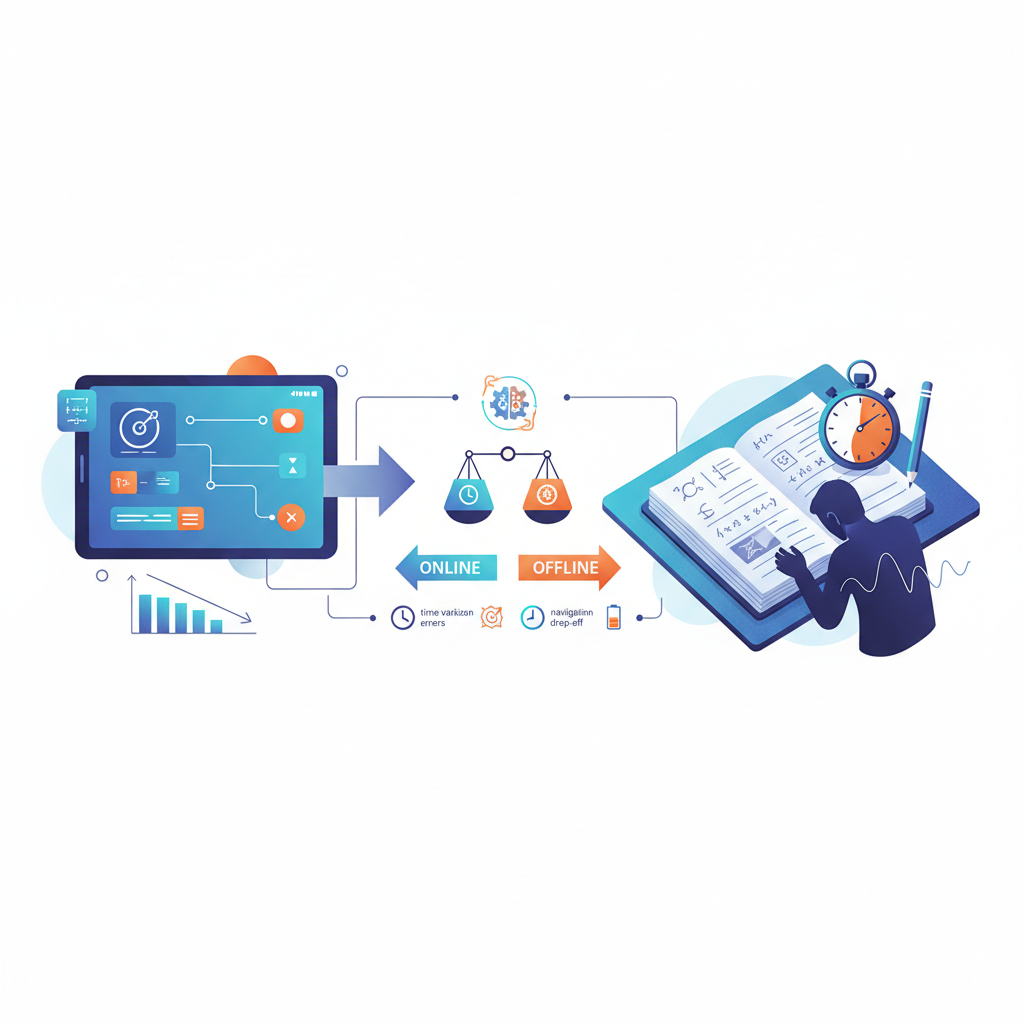
Online mock tests reveal interface friction and pacing errors through instant, granular analytics, while offline mock tests expose endurance limits and exam-hall pressure that only a real room, a real OMR sheet, and real strangers around you can trigger. Neither format alone predicts your rank; the ideal mix shifts as you move from interface familiarization to endurance building to final simulation.
This piece breaks that choice into three concrete prep stages, names the exact metrics, time-per-question variance, navigation errors, and stamina drop-off after two hours, that expose each format's blind spots, and lays out a week-by-week timeline for blending both before results day.
Online vs Offline Mock Tests for JEE: The Stage-by-Stage Verdict
Most guides say "use both" without saying how much of each, when.
| Prep Stage | Recommended Mix | What It Trains |
|---|---|---|
| Early prep (interface familiarization) | 80% online / 20% offline | Screen navigation, palette clicks, chapter-wise recall |
| Mid prep (endurance building) | 50% online / 50% offline | Long-section pacing, subject-switch stamina |
| Final month (final simulation) | 25% online / 75% offline | Hall nerves, OMR discipline, real-room adrenaline |
The logic mirrors a broader decision framework built around comfort with computer interfaces versus need for exam-hall composure. As results approach, students often benefit from compressing revision into a tighter offline-heavy window; a 60-day crash course structured around this final stage can anchor that shift.
Navigation Speed and Interface Errors Only Online Mocks Reveal
Online mocks generate a data trail that paper simply cannot: click timestamps, palette navigation, and per-question timing that a paper answer sheet can never capture.
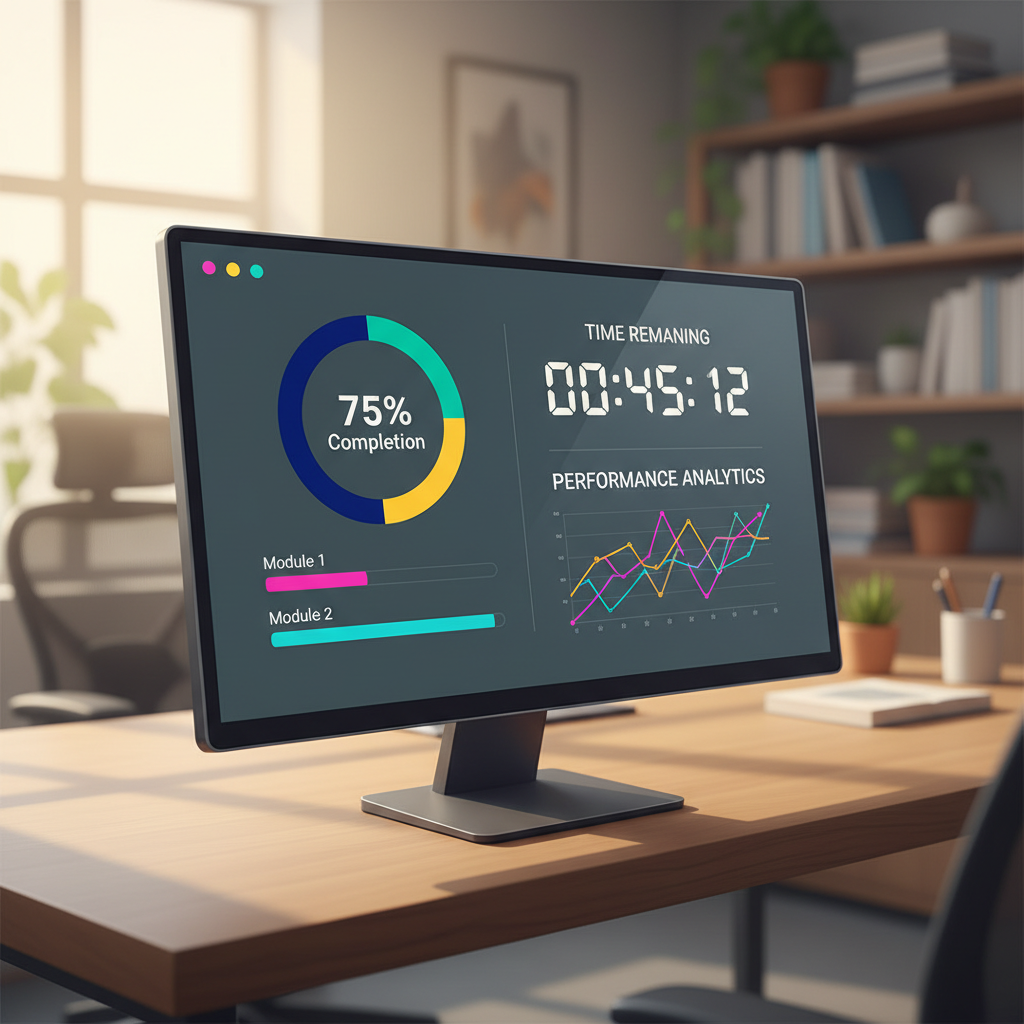
- Time-per-question variance: track how wildly your time swings between similar-difficulty questions; high variance signals decision paralysis, not lack of knowledge.
- Navigation errors: count how often you jump between sections mid-question or re-open a marked question without a plan, a habit that costs 5 to 10 minutes per mock according to speed-improvement tracking.
- Flag-and-revisit ratio: too many flagged questions relative to attempts often means your first-pass triage rule needs tightening, not more content revision.
If pacing drills feel abstract on paper, watching a worked walkthrough helps calibrate speed expectations; our JEE strategy videos break down exactly this kind of per-question triage.
Stamina Tracking: What Offline Mocks Expose That Online Cannot
A screen never tires you the way a plastic chair, ambient noise, and three uninterrupted hours do.

- Stamina drop-off after two hours: compare accuracy in the first 90 minutes against the last 90 minutes of a full-length paper mock; a steep drop is a fitness problem, not a knowledge gap.
- Late-section accuracy crash: JEE's 75-question, 300-mark, three-hour format specifically punishes fading focus, since a full-length mock breakdown notes stamina and pacing are what the final-phase mocks exist to train.
- OMR and bubbling discipline: mechanical slips (wrong row, skipped bubble) only surface under real paper conditions and rarely show up in a click-based interface.
Students juggling multiple entrance exams often see stamina issues compound across subjects; a coaching structure built for consistency across JEE and NEET helps catch this pattern early rather than discovering it in November.
Normalization and Scoring Differences Between Formats
Online platforms score instantly and often present percentile-style feedback, while offline test series usually rely on manual evaluation and institute-level normalization against a batch. That difference in scoring logic matters more than most students realize when comparing mock results across formats.
Online test series typically emphasize instant feedback and analytics, which is excellent for iteration speed but can inflate confidence since it benchmarks you only against that platform's user base. Offline mocks, by contrast, benchmark you against your actual coaching cohort, closer to a real exam-day competitive pool, though feedback takes longer to arrive. Some apps now bridge this by letting you attempt papers offline and sync results once reconnected, per a digital prep strategy guide, but the underlying normalization gap remains. Before investing heavily in either format's premium tier, it's worth weighing whether that spend actually changes your score trajectory; a cost-benefit framework for coaching decisions applies just as well to test series subscriptions.
The Week-by-Week Integration Timeline
Blending formats without a schedule usually collapses into whichever one is more convenient that week.
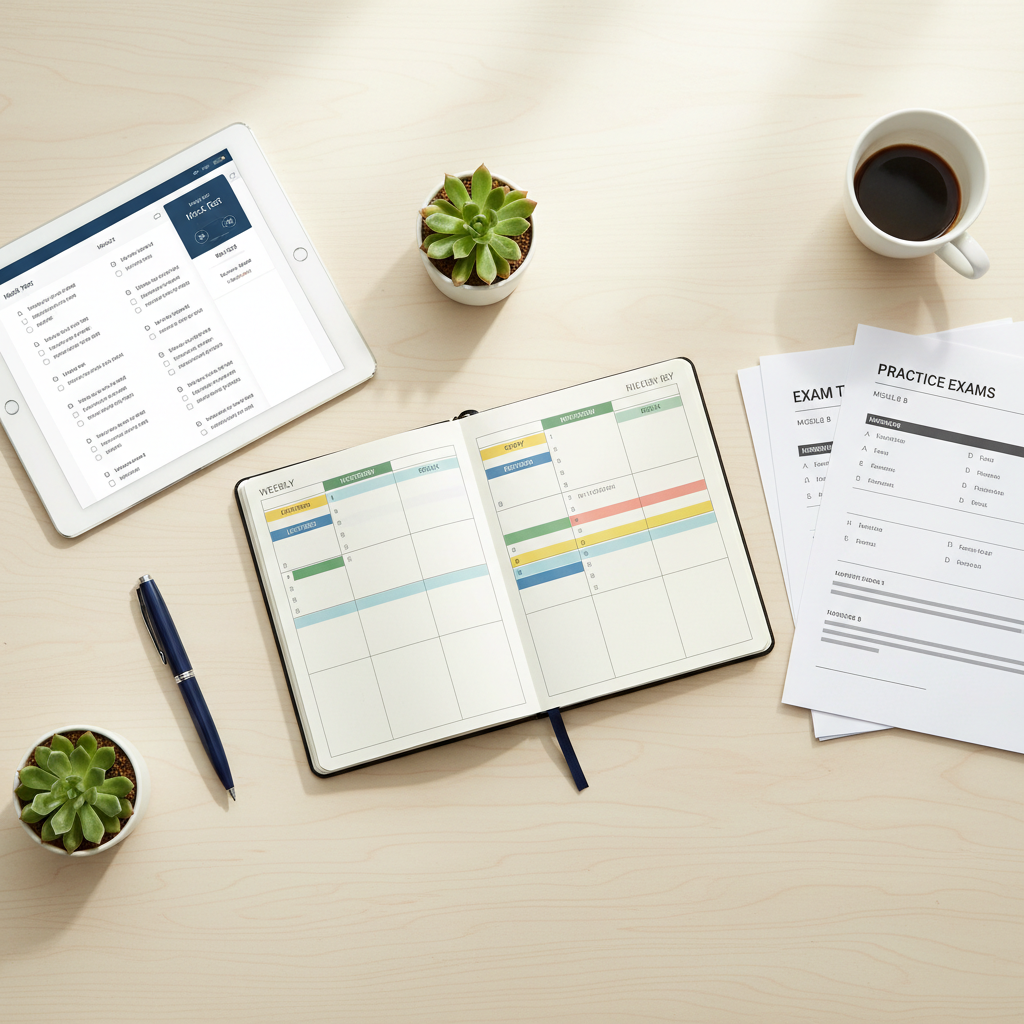
A practical weekly rhythm, adapted from a tested hybrid schedule, looks like this in the early and mid stages: online topic tests on weekdays for quick reinforcement, one timed online section midweek for pacing, and a full offline paper mock every second weekend for hall conditioning. In the final six weeks, flip the ratio so offline full-length mocks happen weekly and online sessions shrink to short diagnostic drills between them. Keep every mock, regardless of format, logged in one running sheet; our store's prep resources include templates built for exactly this kind of cross-format tracking.
When to Switch from Online to Offline JEE Mock Tests
There's no single calendar date for this switch; it's a readiness signal, not a schedule item. Watch for these three markers instead of counting down weeks.
Switch your primary weighting toward offline once your online navigation errors have flattened out for at least three consecutive mocks, since that signals the interface is no longer your bottleneck. Students who logged 15 or more full-length mocks saw score improvements of 18 to 32 percent, according to long-term mock tracking, largely because the volume forced this transition naturally. Also switch earlier if your stamina drop-off after two hours hasn't improved despite three or more attempts, since only real-room repetition fixes that specific gap. For quick reminders on pacing this shift, follow along on our exam-prep updates.
Build Your Mock Test Strategy with RG Lectures
Getting the online-offline mix wrong wastes months of prep on the wrong problem, chasing interface comfort when you actually need stamina, or grinding paper mocks when you still fumble the palette. RG Lectures builds test-series guidance directly into its coaching structure, so students get stage-appropriate mock recommendations instead of generic "do both" advice. If you're also balancing NEET alongside JEE, the same stage logic applies; explore our daily study plan framework to see how format switching fits into a broader weekly routine. Talk to us about which stage you're in right now, and get a mock schedule built around it rather than around whatever test series happens to be convenient.
FAQs on Online vs Offline Mock Tests for JEE
Which Format Is Better for JEE, Online or Offline Mock Tests?
Neither is universally better; online mocks train navigation and pacing with instant analytics, while offline mocks train endurance and exam-hall pressure that only a real room replicates.
How Do I Mix Online and Offline Test Series for JEE Preparation?
Weight online tests heavily early for interface comfort, balance both mid-prep for pacing and stamina, then shift to mostly offline mocks in the final month before exam day.
What Metrics Should I Track in JEE Mock Tests to Predict Actual Exam Performance?
Track time-per-question variance, navigation and flag-revisit errors, stamina drop-off after two hours, and section-wise accuracy trends across multiple mocks, not any single score.
When Should I Switch from Online to Offline JEE Mock Tests?
Switch once your navigation errors flatten across three consecutive online mocks or once your stamina drop-off after two hours stops improving despite repeated attempts.
Do Online Mock Tests Simulate JEE Exam Pressure Accurately?
Not fully; online mocks simulate the screen interface and timing well but cannot replicate the physical fatigue, ambient noise, and social pressure of an actual exam hall.
Are Online JEE Mock Test Scores as Reliable as Offline Ones for Predicting Rank?
Scores from either format only predict rank reliably as a trend across many attempts; single-mock scores in any format can vary 10 to 20 percent from the real result.
How Many Mock Tests Should I Take Before JEE Main?
Students who complete 15 or more full-length mocks tend to see meaningfully larger score improvements than those relying mainly on chapter-wise practice or previous-year papers alone.
Can Offline Mock Test Scores Alone Predict My JEE Rank?
Not alone; offline scores reflect exam-hall readiness well but must be combined with online analytics on pacing and navigation for a complete performance picture.