
TL;DR
Revision batch vs past papers for physics: the signals that justify a batch, a week-by-week final-month protocol, and a mistake-tracking template.
How Effective Are Revision Batches for Physics Compared to Solving Past Papers Alone in the Final Month?
Every physics student staring down the final month faces the same fork in the revision batch vs past papers physics debate: join a structured batch or grind past papers alone. The stakes are real: a batch pricing survey of online crash courses found short revision batches priced from roughly ₹499 to ₹3,500, and picking wrong costs weeks you cannot get back before boards, JEE, or NEET.
Revision batches beat solo past-paper practice only when your mock scores plateau and the same mistake types repeat, since that pattern signals concept gaps a tutor can re-teach faster than you can self-correct. When scores are climbing and errors vary paper to paper, intensive past-paper practice with honest self-analysis gives a better return on your remaining time.
This page maps that decision to observable performance signals, gives week-by-week final-month protocols for batch-focused, paper-focused, and hybrid students, a mistake-tracking template to self-diagnose concept gaps versus execution slips, and the checklist for spotting a good revision batch from a generic recap.
When Revision Batches Add Value
A revision batch earns its cost when your practice data shows a pattern, not just a bad day. Three signals matter most: a score plateau despite volume, repeated mistake types across different papers, and weak ability to diagnose your own errors. Each points toward a concept gap that self-study alone struggles to close quickly.

- Score plateau despite volume: you have solved 15 to 20 past papers over two weeks and your average has not moved, which usually means you are repeating errors instead of fixing them.
- Repeated mistake types: the same conceptual slip, say sign errors in circuit problems or misapplying the work-energy theorem, shows up across three or more unrelated papers.
- Weak self-diagnosis: you mark an answer wrong but cannot explain why beyond "silly mistake," which means you lack the framework to self-correct.
Immediate doubt resolution closes these gaps faster than solo review, according to a Physics Point breakdown of what effective physics coaching includes: concept-first teaching, regular assessments, and instant clarification of doubts. If two or more of these signals apply to you, weigh the trade-off using a cost-benefit framework before spending hours you could otherwise spend practicing.
When Past-Paper Practice Is Enough
Not every plateau needs a classroom. If your scores are trending up and your mistakes look different from paper to paper, execution habits, not missing concepts, are the bottleneck. Past papers used correctly train exactly this: exam technique, timing, and answer wording, which a past-paper guide treats as a feedback tool rather than a question bank to exhaust.
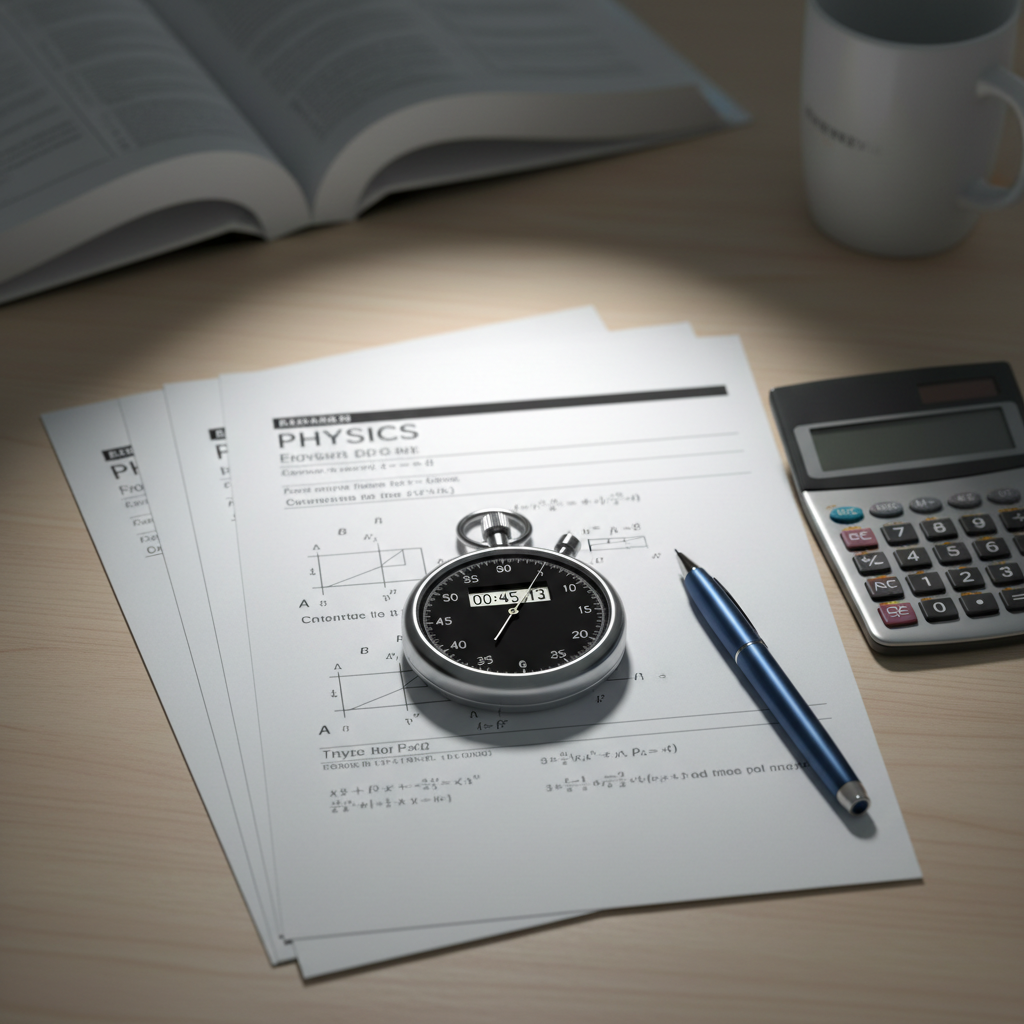
- Rising scores: each attempt improves on the last, even if slowly.
- Diverse mistakes: errors move across topics instead of clustering on one concept.
- Strong error-analysis skills: you can explain each miss in one sentence and name the fix for next time.
Matching paper type to your stage of revision matters more than raw volume:
| Stage | Approach | Goal |
|---|---|---|
| Early (weeks 1-2) | Topic-wise papers, open book allowed | Confirm understanding, build answer structure |
| Middle (week 3) | Mixed-topic sections, partial timing | Bridge learning to exam conditions |
| Late (final week) | Full papers under strict timing | Build exam stamina, reveal last gaps |
This staged approach is also cheaper. A 60-day crash course breakdown shows how much ground disciplined self-practice can cover without a tutor, provided you review the mark scheme honestly instead of rushing to the next paper.
Final-Month Protocols
The final month splits into four workable weeks. Your choice of protocol depends on the signals.
| Week | Batch-Focused | Paper-Focused | Hybrid |
|---|---|---|---|
| Week 1 | Batch sessions on 2-3 weak topics, 1 paper for baseline | 3-4 topic-wise papers, self-mark same day | 1 batch session on weakest topic plus 2 topic-wise papers |
| Week 2 | Batch-led error review, re-attempt flagged questions | Mixed-topic papers under partial timing | 1 batch session plus mixed-topic papers on off days |
| Week 3 | Batch mock test with individual feedback | Full timed papers, detailed self-analysis after each | Batch mock plus 2 self-timed full papers |
| Week 4 | Batch revision of high-weightage topics, 1-2 full mocks | Daily full mocks, formula recall drills | High-weightage batch recap plus 2 solo mocks |
A quick daily habit that fits any protocol is ten minutes of formula recall each morning, an approach a formula-sheet guide recommends specifically to keep recall speed sharp without eating into paper-solving time. Students following a small-batch coaching model often get this feedback loop built in, since smaller class sizes allow individual error review every week. For day-by-day structure across all subjects, not just physics, a daily study plan framework shows how to slot revision blocks around the rest of your syllabus.
Mistake-Tracking Template
You need data to choose the right protocol. The fastest way to get it is a simple log you fill in after every paper.

| Paper / Date | Topic | Mistake Type | Concept or Execution | Fix Action |
|---|---|---|---|---|
| Paper 3, Oct 12 | Current Electricity | Wrong formula for parallel resistors | Concept | Re-derive formula, redo 5 similar problems |
| Paper 4, Oct 14 | Optics | Misread convex/concave sign | Execution | Slow down, re-read question before solving |
Tag each error "Concept" (you did not know the rule) or "Execution" (you knew it but slipped). If three or more mistakes in one topic are tagged "Concept" across different papers, that topic needs re-teaching, which is exactly where a consistency-focused coaching model earns its place. If most tags are "Execution" and spread across topics, keep solving papers and simply slow down on the flagged step.
What a Good Revision Batch Looks Like
Not all revision batches deliver the same value, and the difference usually shows up before you enroll, in how a batch selects content, structures practice, and handles feedback.
| Feature | Good Revision Batch | Red Flag |
|---|---|---|
| Content selection | Targets error-prone topics from past papers | Generic full-syllabus recap, same for everyone |
| Practice format | Timed tests under exam conditions | Untimed lecture-only sessions |
| Feedback | Individual review on a defined set of problems per student | Group feedback with no personal error review |
| Pace | Matches how many weeks are left | Fixed schedule regardless of your start date |
A batch that skips personalization is just a lecture rebroadcast with a fee attached. Before you pay, check whether the program reviews individual mistakes or only covers topics, and compare options through resources like the RG Lectures store rather than judging on marketing alone.
Get a Structured Final-Month Plan with RG Lectures
Choosing between a revision batch and solo past-paper practice only works if you actually track your mistakes first, and most students never do that consistently on their own. RG Lectures builds error-pattern review and timed testing into its final-stretch coaching, so the decision above is made with real data instead of guesswork. If MHT CET is your target exam this cycle, the MHT CET 2027 batch is structured around exactly this diagnostic approach: targeted re-teaching for concept gaps, full timed papers for execution practice, and individual feedback each week. Start by logging your last three papers using the mistake-tracking template above, then use that data to decide whether a batch or more solo practice fits your final month.
FAQs on Revision Batch vs Past Papers Physics
Is a Revision Batch Worth It Before Physics Exams?
It is worth it if your mock scores have plateaued and the same mistake types repeat across papers, since that pattern signals concept gaps solo practice struggles to fix quickly.
How Many Past Papers Should I Solve in the Final Month?
There is no fixed number; what matters is whether each paper changes your mistake pattern. Fifteen to twenty papers with no score movement means you need a different approach.
What Topics Should a Good Revision Batch Prioritize?
A good batch prioritizes topics that show up repeatedly as errors in your own past papers, not a generic full-syllabus recap that treats every student the same.
How Many Hours Should I Split Between Batch Classes and Self-study?
Split time based on your signals: heavier batch hours early if concept gaps dominate, heavier solo paper-solving if your errors are mostly execution slips and scores are rising.
Can Self-study with Past Papers Replace Coaching Entirely?
Yes, if you can accurately diagnose your own mistakes and your scores keep improving; strong self-analysis skills are the main requirement for solo practice to work.
What Separates a Good Revision Batch from a Weak One?
A good batch offers timed practice and individual feedback on error-prone topics; a weak one is a lecture-style recap of the syllabus with no personalization.