

TL;DR
We find online test preparation worth paying for only when a timed diagnostic identifies a persistent gap that free resources have not fixed. We show students how to choose among five formats, audit quality, calculate cost per completed study cycle, and use a 14-day trial to continue, upgrade, switch, or cancel.
When Is Online Test Preparation Worth Paying For?
Choosing support is a budget decision for competitive-exam students, especially when family money and limited weeks are at stake. In India, 27.0% of school students reported taking or having taken private coaching in the 2025 national survey.
Online test preparation is worth paying for when a diagnostic reveals a specific gap that free resources have not fixed, such as repeated content errors, weak pacing, skipped test analysis, unresolved doubts, or a broken study plan. Choose the least intensive format that fixes that gap, then review use and error patterns after 14 days.
We will help you run that diagnostic, compare five support formats, assess quality, and calculate value without pretending any course can promise a score gain.
One-Minute Decision
- Continue free: Your planned tests, error reviews, and study sessions are being completed, and the same mistake is becoming less common.
- Buy targeted help: The same bottleneck survives two analysed timed attempts, or doubts and missed plans keep stopping progress.
- Avoid a broad purchase: More videos, rankings, or dashboard logins do not fix an undefined problem.
When Is Online Test Preparation Worth Paying For?
We advise paying only when you can name the job the support must do. “I need to improve” is not yet a buying reason. “I understand mechanics but lose time on multi-step questions” or “I keep leaving doubts unresolved for days” is a reason you can test.
Start with the free baseline available to you. A current government-backed free test series includes mock tests, performance analysis, post-test doubt removal, and mentorship, so paid help must add a clear improvement in structure, feedback, access, or accountability.
Use these decision rules before spending:
- Pay for content support: When you cannot explain or apply a repeatedly tested concept after a focused free review.
- Pay for test analysis: When you take mocks but cannot turn wrong answers into a repeatable correction plan.
- Pay for doubt support: When one unresolved problem blocks a high-priority chapter or revision session.
- Pay for accountability: When realistic weekly plans repeatedly fail despite having enough material and study time.
For students whose main concern is whether their mock format reflects the real experience, our mock-test comparison can help separate a realism issue from a content issue.
What Support Does Your Diagnostic Actually Point To?
A useful diagnostic does not start with a course catalogue. We begin with one timed baseline, then ask what happened inside that attempt. Practice testing itself is valuable, but a review of 222 studies involving 48,478 students found that effects varied with feedback, repetitions, format consistency, and material matching in the practice-testing review.
Which Five Inputs Should You Record?
Record your current timed score or accuracy, your target, exam date, reliable weekly study hours, and error distribution. Reliable means hours you actually protected last week, not the hours you hope to find during a perfect week.
Classify each error as a content error, misread question, method error, pacing error, careless error, or unanswered item. The pattern matters more than the total score alone because different patterns need different support.
Is the Missing Piece Content, Practice, or Feedback?
Content review helps when you do not know the concept. Practice volume helps when you know the concept but have not used it enough. Test realism helps when your practice does not mirror the real interface, timing, marking, or question mix.
Feedback is different again. It means identifying why an answer went wrong and choosing the next corrective action. A solution video may explain the answer, but it does not automatically tell you whether you need concept review, a pacing drill, or a change in question selection.
For an exam with a defined computer-based format, use the current official notice as the realism check. For example, the 2026 official JEE notice specifies a computer-based Paper 1 with 75 questions and a three-hour duration.
When Do Doubts or Accountability Become the Problem?
Doubt support is worth considering when the same unresolved question delays planned work more than once. Accountability support is worth considering when you have lessons and tests available but repeatedly miss the sessions that would create progress.
We recommend recording this in a simple error log before changing formats. Students can also use our support diagnostic to distinguish a recurring preparation problem from one disappointing test.
Which Format Fits Your Bottleneck and Budget?
The best format is usually the least intensive one that reaches the confirmed problem. A student with a stable plan and one recurring doubt does not need the same purchase as a student who has broad gaps, an unstable schedule, and no completed mock-review routine.
| Format | Best Fit | What To Check | Poor Fit |
|---|---|---|---|
| Free Self-Study | Strong self-regulation and isolated gaps | Official-pattern tests, solutions, error log | Repeated unreviewed errors or no schedule adherence |
| Self-Paced Course | Content gaps with a stable schedule | Structured lessons, explanations, progress tracking | Need for rapid doubt resolution or live accountability |
| Live Group | Students who need a fixed routine | Timetable, participation route, post-class review | Highly individual bottlenecks or unstable availability |
| Doubt Support | Specific questions repeatedly block work | Teacher access, response route, solution quality | Broad syllabus gaps or no practice habit |
| One-To-One Support | Persistent, narrow bottleneck needing tailored feedback | Diagnostic, targeted plan, work review | Buying hours before identifying the bottleneck |
If you keep taking mocks but cannot identify why familiar mistakes return, use our mock-score diagnosis before moving from self-study to a more expensive format.
How Should You Score Student Fit?
We use five factors: self-regulation, schedule stability, score-gap breadth, recurrence of one bottleneck, and budget comfort. Give each factor 0 to 2, then use the total as a conversation starter rather than a promise.
A total of 0 to 3 usually points to improving free self-study first. A total of 4 to 6 can justify a self-paced course, live group, or targeted doubt support. A total of 7 to 10 may justify more personal help, but only after you verify access and review quality.
Why Is a Dashboard Not Enough?
Online tools can surface useful patterns, but visible charts alone do not create a study decision. An umbrella review found that fewer than 30% of learning dashboards offered recommendations, while nearly 60% offered visualizations in the online-learning review.
Choose a format that turns data into an action: revisit a concept, attempt a timed drill, ask a teacher, or change the next week’s plan. Our self-study versus mentor support guide can help you make that choice.
How Do You Calculate ROI Without Predicting Score Gains?
We do not recommend treating score forecasts as return on investment. Instead, calculate whether you are paying for and using a complete study cycle: planned work, a timed attempt where appropriate, error review, and a documented next action.
| Metric | Formula | What It Reveals |
|---|---|---|
| Verified Total Cost | Fee + mandatory extras + taxes − verified refund | The amount actually at risk |
| Test-Use Rate | Completed full mocks ÷ included full mocks | Whether included tests are being used |
| Support-Use Rate | Used support interactions ÷ included interactions | Whether access matches actual need |
| Completion Rate | Completed study cycles ÷ planned study cycles | Whether the format fits your routine |
| Cost Per Completed Cycle | Verified total cost ÷ completed cycles | The cost of a full learning loop |
| Cost Per Reviewed Mock | Verified total cost ÷ reviewed mocks | Whether testing is producing analysis |
Before you enter a price, verify the access end date, included tests, support route, teacher availability, mandatory materials, and cancellation or refund terms. We also recommend separating a test-use rate from a support-use rate, because a student may use every mock while never using the doubt access that raised the price.
A quality purchase should offer exam-like tests, explanations that identify the error, useful analytics, actionable recommendations, clear teacher access, and progress tracking that measures completed work rather than just logins. Students comparing individual and group support can use our one-to-one or group help guide before deciding whether personal attention is necessary.
How Should a 14-Day Trial Change Your Decision?
A trial should test behaviour, not hope. Over 14 days, track planned sessions, completed sessions, timed attempts, post-test reviews, repeated error categories, pacing, doubts raised and resolved, and confidence before versus after a mock.
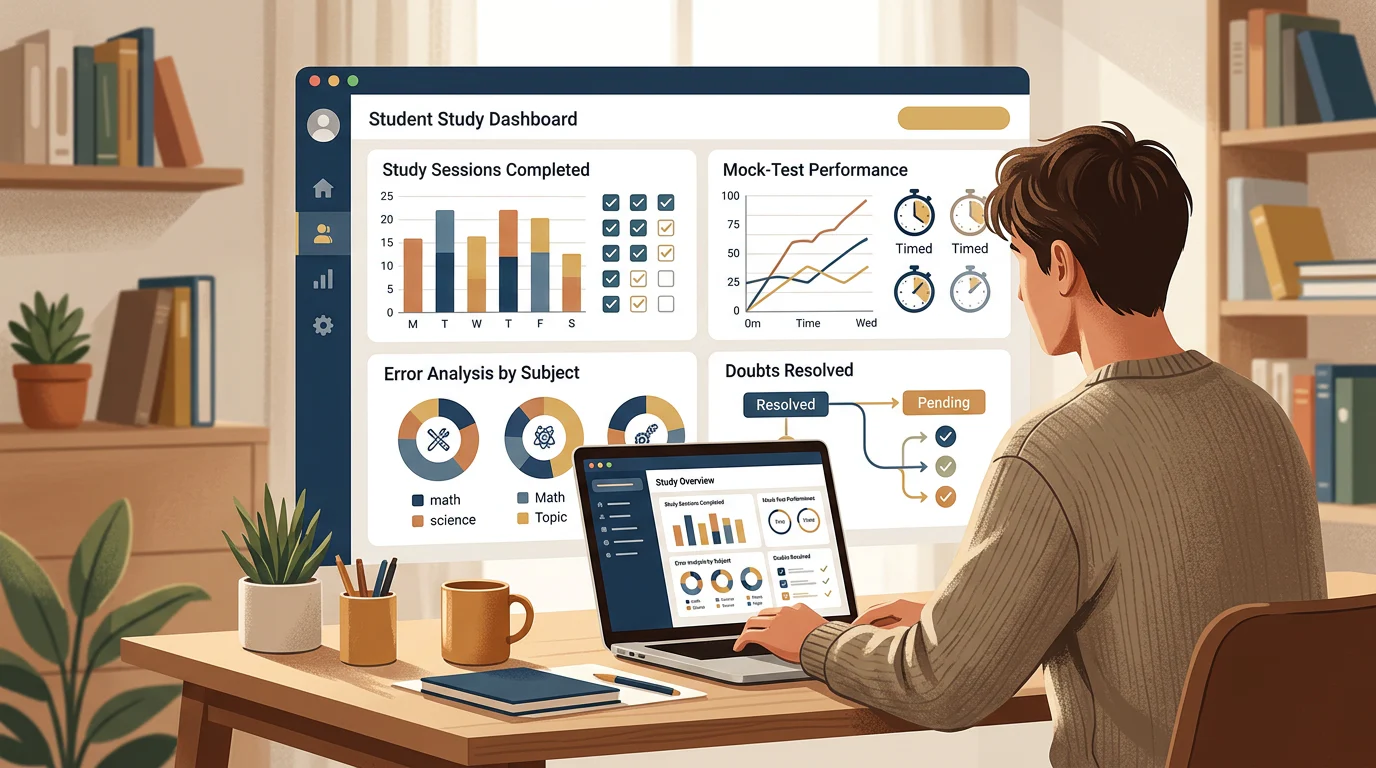
A useful review asks whether the product or plan changed what you did next. If you completed two timed attempts, reviewed every completed mock, and reduced one repeated error category, continue the approach. If usage is low because the timetable does not fit, switch format rather than buying more access.
Use the following rules:
- Continue free: Your completion and review habits are working, and the bottleneck is narrowing.
- Purchase targeted support: Free material is enough, but feedback, doubt resolution, or accountability is repeatedly missing.
- Upgrade: You are using the current format consistently, yet it cannot address the confirmed problem.
- Switch: The tests, explanations, access, or tracking do not match what was promised.
- Cancel: You are not completing cycles, reviewing errors, or using the support that made the purchase more expensive.
Students with school-day scheduling problems can use our doubt-support value guide to set a workable baseline before deciding that a paid program is the answer.
Why Choose RG Lectures for Targeted Support?
At RG Lectures, we believe the right support should make your next study cycle clearer, not merely make your dashboard busier. We help competitive-exam students separate a concept gap from a practice, pacing, doubt-solving, or consistency problem before they commit to more material. If your error log points to physics doubts, use our explanations and mentoring conversations to turn those doubts into a specific next action. If you are already consistent, we would rather help you sharpen your review system than push you into unnecessary intensity. Begin by writing down your target, next exam date, available weekly hours, and the single error pattern that keeps returning. Then compare that evidence with the access, test practice, and support you actually need. Make your next decision with purpose and on your own terms at RG Lectures.
FAQs on Online Test Preparation
We hear these questions from students deciding between solo practice and structured help. Our answers keep the decision tied to diagnosed needs, actual usage, and realistic study conditions.
Can Free Resources Be Enough?
Yes. We recommend staying free when you complete exam-like tests, review every error, and follow a weekly plan without recurring doubts, missed sessions, or unexamined mistakes.
Is a Self-Paced Course or Live Support Better?
We prefer self-paced learning when your routine is stable. Choose live support when accountability, rapid doubt resolution, scheduled feedback, or real-time explanations are your confirmed needs.
How Many Mocks Should I Take Before Paying?
We recommend two analysed timed attempts before purchasing. Those attempts can reveal whether the same content, pacing, selection, or error-review problem keeps recurring across your study cycle.
When Should I Cancel a Subscription?
Cancel or do not renew when you are not completing study cycles, reviewing errors, using included support, or receiving the promised test realism and feedback.